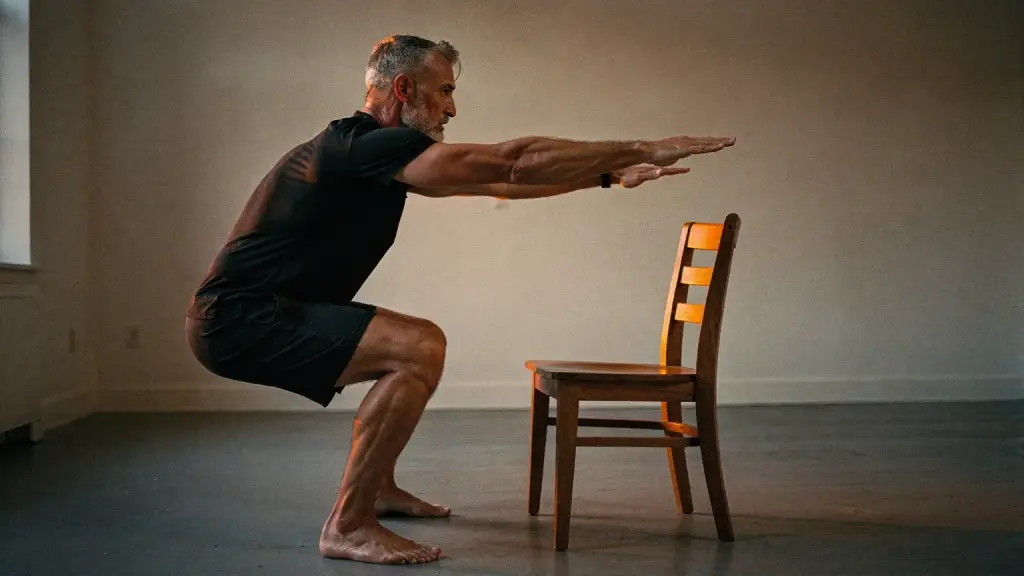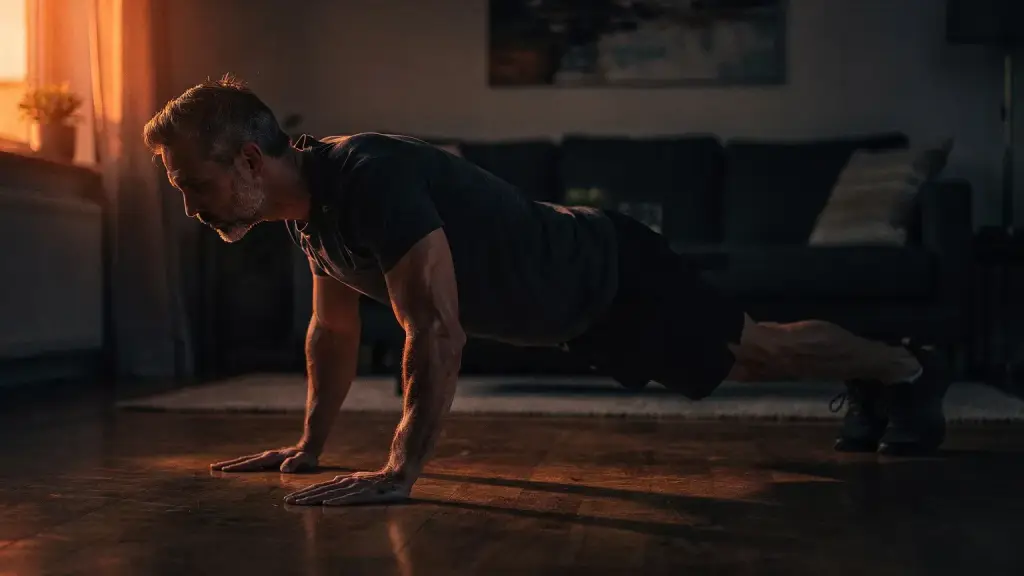

Yes, military calisthenics is a good way for men over 40 to get strong again. You still build muscle and strength at this age; you just need a proper warm-up, fewer jumps at first and a bit more recovery. The training itself barely changes.
If you’re 43, haven’t trained in years and wonder whether it’s too late, it isn’t. Here’s what actually changes and what to do about it.
What actually changes in your body after 40?
Less than you’d think, and more slowly. A study that scanned 468 adults found muscle mass doesn’t drop noticeably until your late forties, and most of the loss is in the legs.(1)
Testosterone falls gradually too. In the Massachusetts Male Aging Study, men aged 40 to 70 lost total testosterone at about 1.6% a year.(2) That’s a slope, not a cliff.
What you will notice is recovery. Soreness lasts a day longer, joints complain after jumping, and a missed warm-up costs more than it did at 25.
What doesn’t change?
Your ability to get stronger. A meta-analysis of 47 studies of adults over 50 found strength training raised strength by 24 to 33% across common lifts.(3)
Muscle still grows too. Across 49 studies in adults over 50, resistance training added an average of 1.1 kg of lean mass, and higher-volume programs added more.(4) The same study found younger participants gained more, so starting at 40 beats waiting until 55.
Push-ups work just as well as gym presses for building strength. See why in our guide to building muscle at home with no equipment.
Is military calisthenics safe after 40?
For most healthy men, yes. The NSCA’s position statement on resistance training for older adults calls it safe and effective when it’s supervised or progressed sensibly.(5)
Bodyweight training has an extra safety margin: there’s no bar to get stuck under and nothing to drop. The risk comes from doing too much, too fast, especially jumping.
New to the whole idea? Start with what military calisthenics actually is, then come back here.
How should your first two weeks look?
Same program, four adjustments:
- Never skip the warm-up. Most of the evidence says warming up lowers injury risk.(6) Each session in the program already starts with two and a half to four minutes of neck, shoulder, wrist and leg prep.
- Swap the jumps. Use the low-impact versions below until your knees and Achilles feel solid.
- Stop two reps early. Finish each round feeling you could have done a couple more.
- Take a second easy day if you’re still sore 48 hours later.
| Week 1 move | Start with | Move up when |
|---|---|---|
| Push-ups | Knee push-ups | 15 clean reps |
| Jump squats | Bodyweight squats | No knee pain for a week |
| Burpees | No-jump burpees | Day 7 feels easy |
| High knees | Marching in place | Calves stay fresh |
None of this is cheating. Effort drives strength gains, not the fanciest version of a move. Our beginner’s guide has easier steps for every exercise.

How hard should a session feel?
Hard enough that the last 10 seconds of a round take effort, never so hard that your form falls apart. On a 1 to 10 scale, aim for a 7 in week one and an 8 by week three.
Sessions in Week 1 of the program run 10 to 13 minutes, including the warm-up and cool-down. That’s short on purpose. You’ll be back tomorrow, and showing up six days a week is what builds the result.
The full four-week structure is laid out in the military calisthenics workout plan.
How do you recover faster after 40?
Recovery is where most men over 40 lose ground, and it’s the easiest part to fix:
- Sleep seven hours or more. It’s the adult minimum sleep experts recommend.(7)
- Eat protein at every meal. Gains level off around 1.6 g per kg of body weight a day.(8)
- Walk on easy days instead of sitting still. It eases stiffness.
- Keep training through mild soreness. Sharp or joint pain means stop and swap the move.
There’s one more reason to stay consistent. Older adults need more weekly training than young adults to keep the muscle they’ve built.(9) Six short sessions a week covers that.
For the food side, our calisthenics nutrition guide keeps it simple.
What results can you expect?
Strength comes first. Most men add push-up reps within two to three weeks, mostly because their nervous system learns the move. Visible muscle and a smaller waist usually take 8 to 12 weeks.
The push-ups matter more than they look. In a 10-year study of male firefighters, average age about 40, men who could do more than 40 push-ups had far fewer heart events than those who managed fewer than 10.(10)
That’s an association, not proof push-ups protect your heart. But it’s a useful number to train toward.
What if you’re closer to 50, or carrying old injuries?
The same rules apply, with more patience. Stay on the low-impact versions longer and add a second rest day if your joints need it.
In Military Calisthenics Men – MLT, you choose your care areas, like knees, back or shoulders, when you build your program. For now, you can skip any exercise that doesn’t feel right; plans that adjust automatically are in the works.
For men in their fifties, our guide to military calisthenics after 50 goes further on joint-friendly training.

Start at 40-something, at your pace. Open Military Calisthenics Men – MLT, press play, and a real instructor walks you through your first 15-minute session. The app picks the level, the timing and the next step.
Try 3 days freeThen $29.99 a year. Cancel anytime.
 For women: Military Calisthenics Women – HQ→
Frequently asked questions
Is 40 too old to start military calisthenics?
No. Men in their forties build strength and muscle well with bodyweight training. Start with the easier versions of each move, warm up every time and build up over two to four weeks.
Can you build muscle after 40 with just bodyweight?
Yes. Research in adults over 50 shows resistance training adds lean mass and raises strength by roughly a quarter to a third. Push-ups, squats and lunges count, as long as they get harder over time.
How many days a week should a man over 40 train?
Short daily sessions work well: the program uses six focused training days and one total-body endurance day. If you’re still sore after 48 hours, take an extra easy day and walk instead.
Should men over 40 do burpees and jump squats?
Eventually, if your joints are healthy. Start with no-jump burpees and regular squats for the first week or two, then add jumping once landing feels smooth and pain-free.
Is military calisthenics better than the gym after 40?
For most men starting out, it’s easier to stick with: no commute, no equipment and sessions under 20 minutes. The gym lets you load heavier later. Both build strength; consistency matters more than the venue.
Sources
- Janssen I, et al. (2000). Skeletal muscle mass and distribution in 468 men and women aged 18-88 yr. J Appl Physiol.
- Feldman HA, et al. (2002). Age trends in the level of serum testosterone and other hormones in middle-aged men: longitudinal results from the Massachusetts Male Aging Study. J Clin Endocrinol Metab.
- Peterson MD, et al. (2010). Resistance exercise for muscular strength in older adults: a meta-analysis. Ageing Res Rev.
- Peterson MD, Sen A, Gordon PM. (2011). Influence of resistance exercise on lean body mass in aging adults: a meta-analysis. Med Sci Sports Exerc.
- Fragala MS, et al. (2019). Resistance training for older adults: position statement from the NSCA. J Strength Cond Res.
- Fradkin AJ, Gabbe BJ, Cameron PA. (2006). Does warming up prevent injury in sport? The evidence from randomised controlled trials. J Sci Med Sport.
- Watson NF, et al. (2015). Recommended amount of sleep for a healthy adult: a joint consensus statement of the AASM and SRS. Sleep.
- Morton RW, et al. (2018). A systematic review, meta-analysis and meta-regression of the effect of protein supplementation on resistance training-induced gains in muscle mass and strength. Br J Sports Med.
- Bickel CS, Cross JM, Bamman MM. (2011). Exercise dosing to retain resistance training adaptations in young and older adults. Med Sci Sports Exerc.
- Yang J, et al. (2019). Association between push-up exercise capacity and future cardiovascular events among active adult men. JAMA Netw Open.