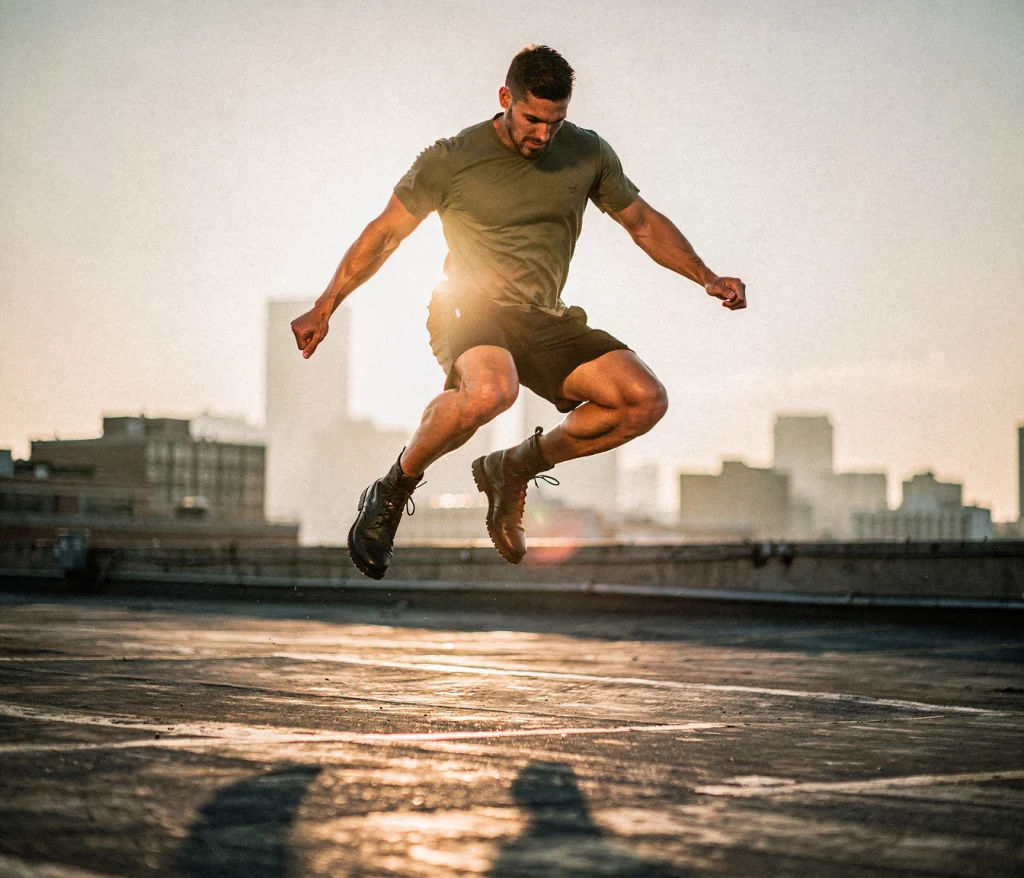
For calisthenics, eat enough protein (about 1.6 g per kg of body weight a day), mostly whole foods, and calories that match your goal: a small surplus to build muscle or a small deficit to lose fat. Everything else is fine-tuning.
Here’s what the research says, without the supplement-industry noise.
How much protein do you need for calisthenics?
Most people training regularly do well on 1.4 to 2.0 g of protein per kg of body weight per day, according to the International Society of Sports Nutrition.(1)
A large meta-analysis found muscle gains from extra protein leveled off at around 1.6 g/kg/day on average.(2) For a 75 kg man, that’s about 120 g a day.
The full breakdown, with food examples: how much protein you need.
Does it matter how you spread protein across the day?
A little. Research suggests aiming for roughly 0.4 g/kg per meal across at least four meals to maximize muscle building.(3)
In practice: get a solid protein source at breakfast, lunch and dinner, plus one snack. That’s enough for most people.
What should you eat to build lean muscle?
Keep a simple plate in your head:
- Half the plate: vegetables or fruit
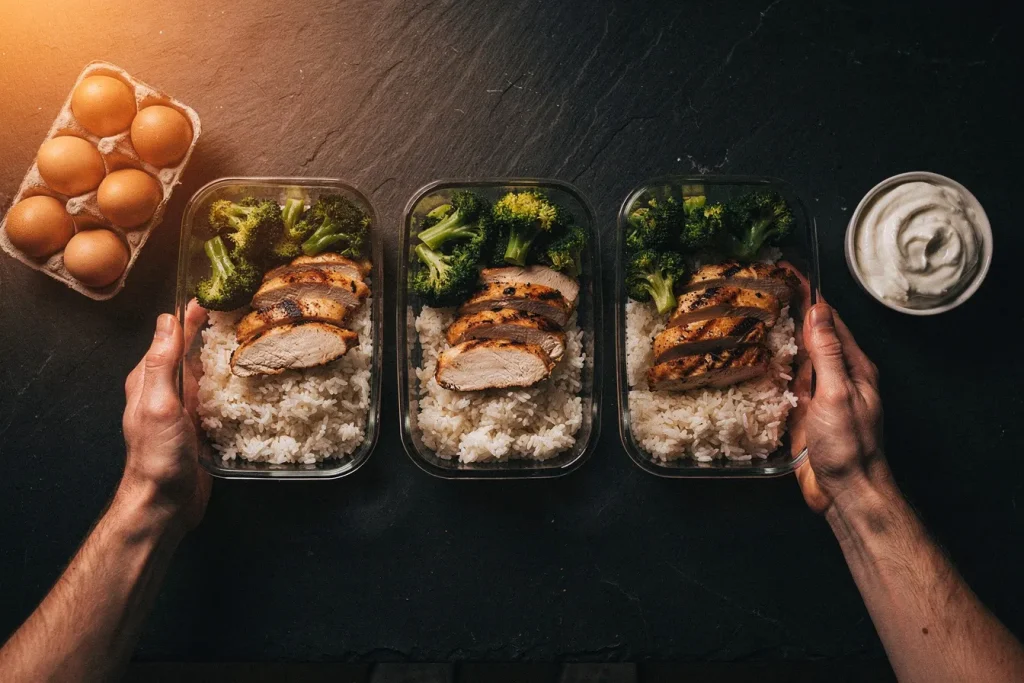
- A quarter: protein (chicken, fish, eggs, Greek yogurt, beans, tofu)
- A quarter: carbs (rice, potatoes, oats, bread)
- A thumb of fat: olive oil, nuts, avocado
To build muscle, eat slightly more than you burn. To lose fat, slightly less. Big swings either way make training harder.
Want a ready-made week? Use our simple military-style meal plan.
Should you eat before a morning workout?
For short sessions of 10 to 20 minutes, it’s mostly preference. Training fasted didn’t change fat loss compared with eating first in one controlled study.(4)
If you feel weak or dizzy, eat something small like a banana or yogurt. More in what to eat before a morning workout.
Is creatine worth it for calisthenics?
It’s the most researched supplement there is. The ISSN considers creatine monohydrate effective for strength and muscle gains, and safe for healthy people at recommended doses.(5)
It’s not required. Food, sleep and consistent training matter far more. Read is creatine worth it for calisthenics.
How much does sleep matter?
More than most supplements. Adults should sleep at least seven hours a night for health.(6) Poor sleep is thought to disrupt the hormones involved in muscle recovery.(7)
Here’s how sleep affects muscle growth.
How do you recover between sessions?
Soreness is normal in the first week. It fades as your body adapts. Light movement and sleep help more than gadgets.
See what actually helps with soreness and whether you need rest days.
How does nutrition fit with the training plan?
Food fuels training; training tells your body what to do with that food. Pair this guide with the military calisthenics workout plan.
Trying to lose fat? Read military calisthenics for weight loss.
The training half, done for you. MLT puts the whole 28-day program on your iPhone, with every session led on video by a real calisthenics instructor. No gym, no equipment, 10–21 minutes a day.
Try 3 days freeThen $29.99/year. Cancel anytime in iPhone Settings.
For women: the HQ edition
Frequently asked questions
What should I eat when doing calisthenics?
Mostly whole foods, with protein at every meal. Aim for about 1.6 g of protein per kg of body weight daily, plus carbs and vegetables. Match total calories to your goal.
How much protein do I need to build muscle with calisthenics?
Between 1.4 and 2.0 g per kg of body weight per day. Benefits level off around 1.6 g/kg for most people, or about 120 g a day for a 75 kg adult.
Can you build muscle with calisthenics without supplements?
Yes. Supplements are optional. Enough protein from food, adequate calories, sleep and progressively harder training build muscle on their own.
Should I eat after a calisthenics workout?
A protein-rich meal within a few hours is a sensible habit. Total daily protein matters more than exact timing.
Sources
- Jäger R, et al. (2017). International Society of Sports Nutrition position stand: protein and exercise. J Int Soc Sports Nutr.
- Morton RW, et al. (2018). A systematic review, meta-analysis and meta-regression of the effect of protein supplementation on resistance training-induced gains in muscle mass and strength. Br J Sports Med.
- Schoenfeld BJ, Aragon AA. (2018). How much protein can the body use in a single meal for muscle-building?. J Int Soc Sports Nutr.
- Schoenfeld BJ, et al. (2014). Body composition changes associated with fasted versus non-fasted aerobic exercise. J Int Soc Sports Nutr.
- Kreider RB, et al. (2017). ISSN position stand: safety and efficacy of creatine supplementation in exercise, sport, and medicine. J Int Soc Sports Nutr.
- Watson NF, et al. (2015). Recommended amount of sleep for a healthy adult: a joint consensus statement of the AASM and SRS. Sleep.
- Dattilo M, et al. (2011). Sleep and muscle recovery: endocrinological and molecular basis for a new and promising hypothesis. Med Hypotheses.