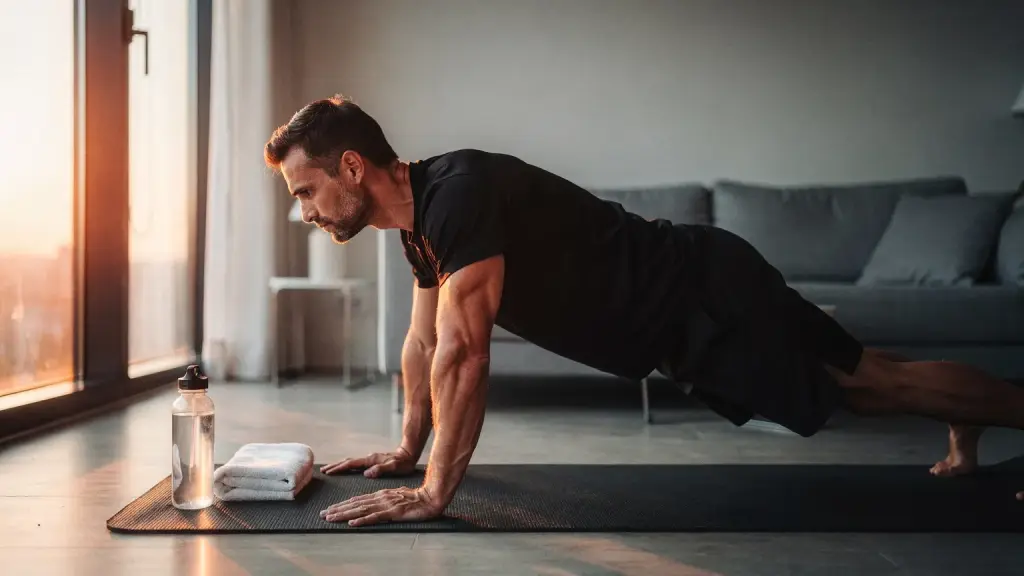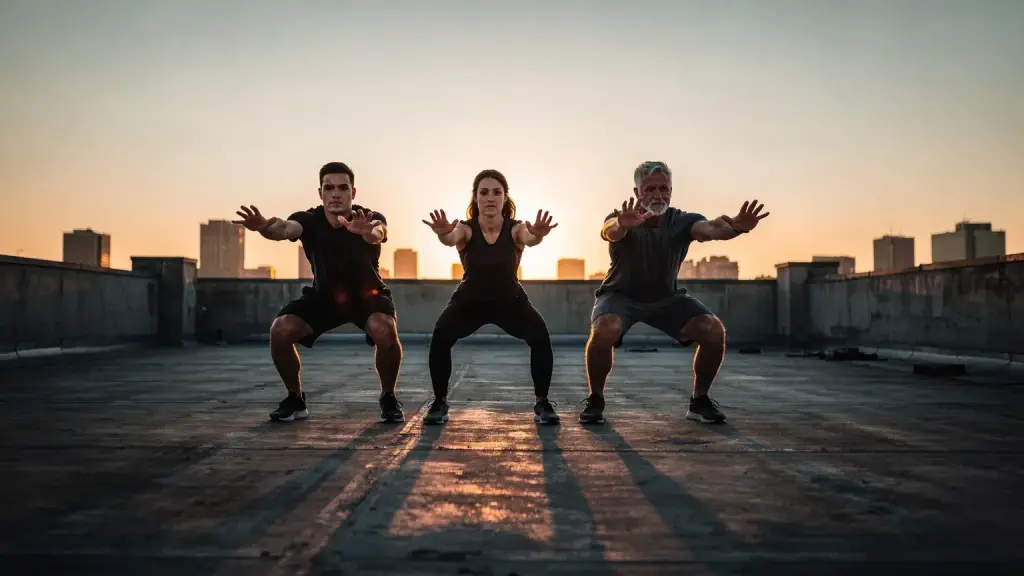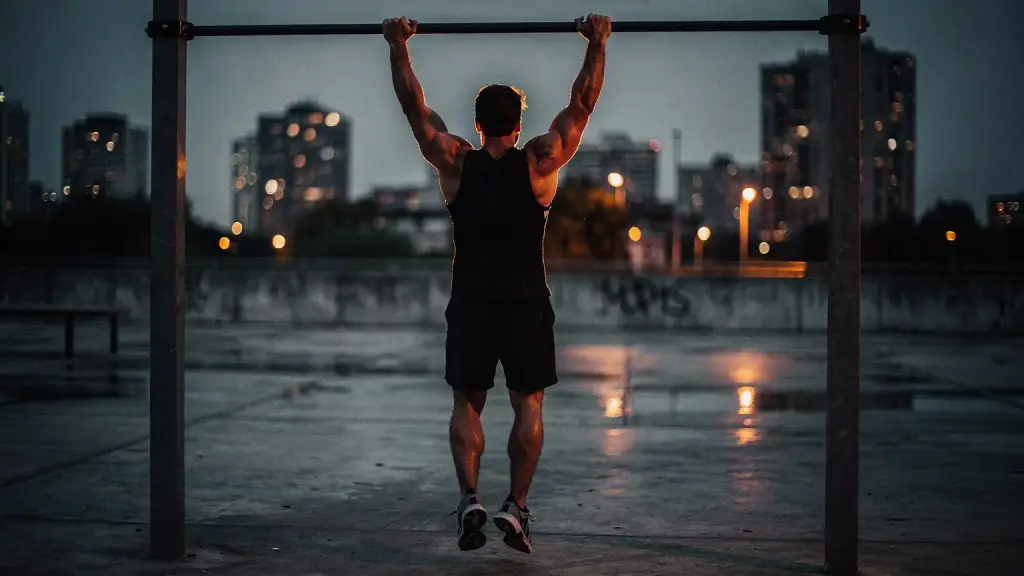

Bodyweight exercises, also called calisthenics, are strength moves that use your own body as the resistance: push-ups, pull-ups, squats, lunges, dips and planks. The 12 below train every major muscle and need only a floor, a sturdy chair and, for one move, a bar.
You get stronger by making each move harder, not by adding plates. By the end of this page you’ll know which exercises to do, which ones train each body part, and how to put them together into a workout at home.
| Question | Short answer |
|---|---|
| Equipment | None to start; a pull-up bar is the one useful buy |
| Time | 10 to 30 minutes a session |
| Muscle | Builds it, if the moves keep getting harder |
| First moves | Push-ups, squats, planks, bridges, lunges |
| Cost | Free |
Do bodyweight exercises build muscle?
Yes, as long as the exercises keep getting harder. In an 8-week calisthenics study, 28 young men raised their pull-up scores by 39% and push-ups by 16%, while posture and body fat improved.
Push-up research points the same way. In a four-week trial, progressively harder push-ups raised bench press strength about as much as bench pressing did.
The catch is effort. Body weight is a light load, so sets need to end close to failure, and the moves need to get harder as you do. How that compares with lifting is covered in calisthenics vs the gym.
The 12 best bodyweight exercises
Start here. These 12 moves cover every major muscle group, and eleven need nothing more than a floor and a sturdy chair.
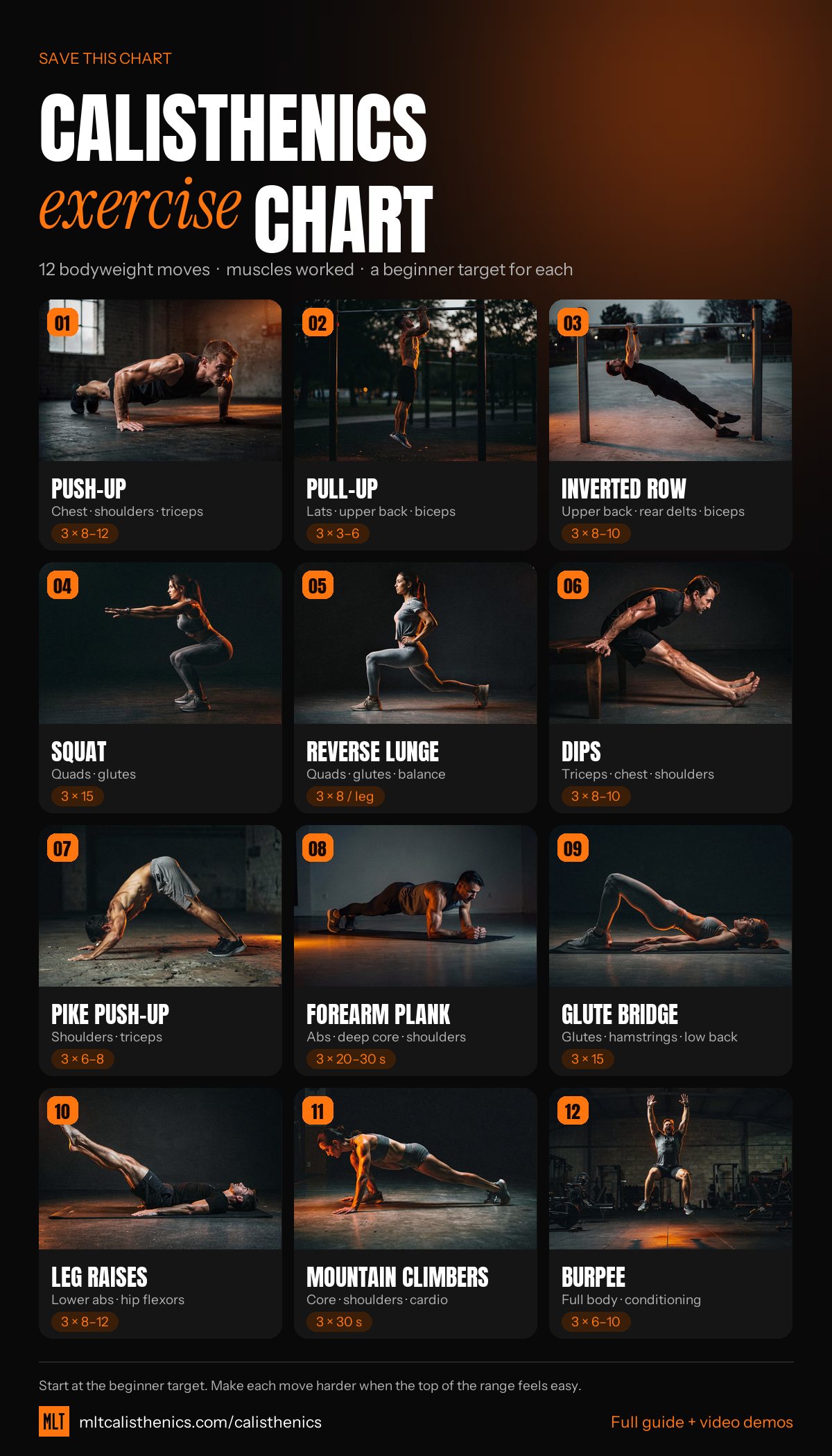
| Exercise | Works | Strong standard |
|---|---|---|
| Push‑up | Chest, shoulders, triceps | 30 strict reps |
| Pull‑up | Back, biceps | 8 strict reps |
| Inverted row | Upper back, biceps | 15 reps |
| Squat | Quads, glutes | 50 to full depth |
| Reverse lunge | Legs, balance | 15 per leg |
| Dips | Triceps, chest | 20 reps |
| Pike push‑up | Shoulders, triceps | 10 reps |
| Forearm plank | Core | 60 seconds |
| Glute bridge | Glutes, hamstrings | 20 with a pause |
| Leg raises | Lower abs | 15 slow reps |
| Mountain climbers | Core, cardio | 60 s nonstop |
| Burpee | Full body | 20 in 2 minutes |
The strong standards are practical targets, not official tests. Hitting most of them puts you in very good shape.
They matter for health, too. In a 10-year study of male firefighters, men who could do more than 40 push-ups had far fewer heart events than those who managed fewer than 10.(1)
Which bodyweight exercises work each body part?
Most of the 12 train several muscles at once. If you want to bring up one area, these are the moves that load it most, with a harder version for when the basics get easy.
Chest
Push-ups are the chest exercise; dips are the second. Widen your hands to shift more work to the chest, and raise your feet on a chair for decline push-ups once 20 reps feel easy. Archer push-ups come after that.
Back
Pull-ups and inverted rows train the lats and upper back. Without a bar, row under a sturdy table, then add back extensions and superman holds for the lower back.
Push-ups far outnumber pulls in most home workouts, so match every push day with some pulling.
Shoulders
Pike push-ups are the bodyweight overhead press, and the first step toward a handstand push-up. Raise your feet to make them harder; wall walks are the next stage.
Arms: biceps and triceps
Triceps are easy: dips, diamond push-ups and close-grip push-ups all hit them hard. Biceps are the hardest muscle to train without equipment. Chin-ups (palms facing you) and underhand inverted rows are the best options.
Legs: quads, hamstrings and glutes
Squats and lunges cover the quads and glutes. Hamstrings need more thought: single-leg glute bridges and single-leg Romanian deadlifts load them best without weights.
For harder quad work, slow your squats to three seconds down, then move to shrimp or pistol squats on one leg.
Core and abs
The plank trains your core to resist movement, which is its real job. Leg raises target the lower abs, and mountain climbers add cardio. V-ups and plank shoulder taps are the harder next steps.
How to do each exercise
Every move below has an easier and a harder version. Pick the one where you can do 6 to 12 clean reps, and move up when the top of that range feels easy.
Training for a military test? The drill-specific moves, like hand-release push-ups and flutter kicks, are in our military calisthenics exercises guide.
1. Push-up
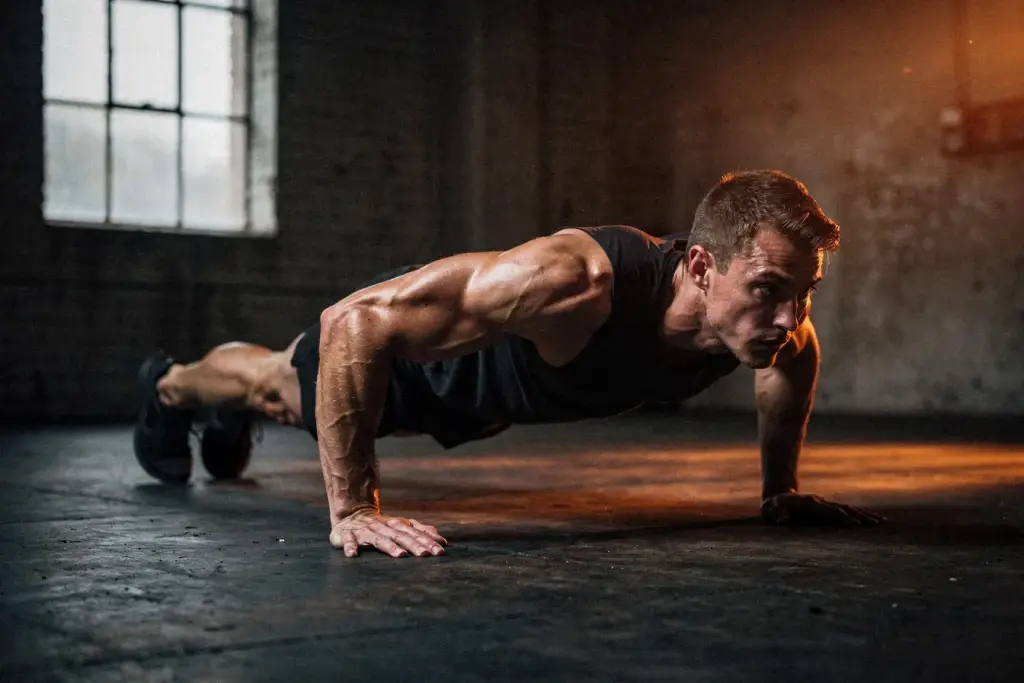
Works chest, shoulders, tricepsLevel beginnerStart 3 × 8–12
The most useful upper-body move there is, and the one you’ll come back to forever.
- Hands slightly wider than your shoulders, body straight from head to heels.
- Lower until your chest is a fist’s height from the floor, elbows at about 45 degrees.
- Press back up without letting your hips sag.
Easier: hands on a kitchen counter. Harder: diamond, then archer, then one-arm push-ups.
 Here's the right way to do it, in under four minutesCalisthenicmovement · 3:38 · YouTube
2. Pull-up
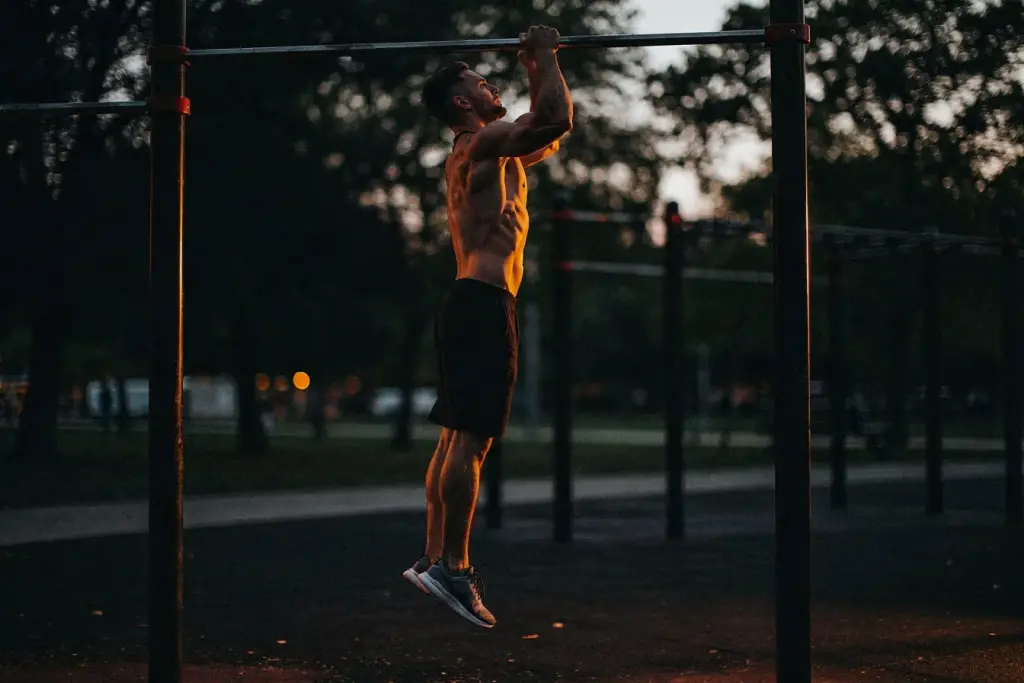
Works lats, upper back, bicepsLevel intermediateStart 3 × 3–6
The best back builder there is, and the only move here that needs equipment.
- Hang from a bar with an overhand grip, hands just outside your shoulders.
- Pull your shoulder blades down first, then drive your elbows toward your ribs.
- Get your chin over the bar, then lower all the way under control.
Can’t do one yet? Jump to the top and lower yourself over 3 to 5 seconds. Five of those per session builds your first rep faster than anything else.
 Watch what a strict rep should look likeCalisthenicmovement · 4:32 · YouTube
3. Inverted row
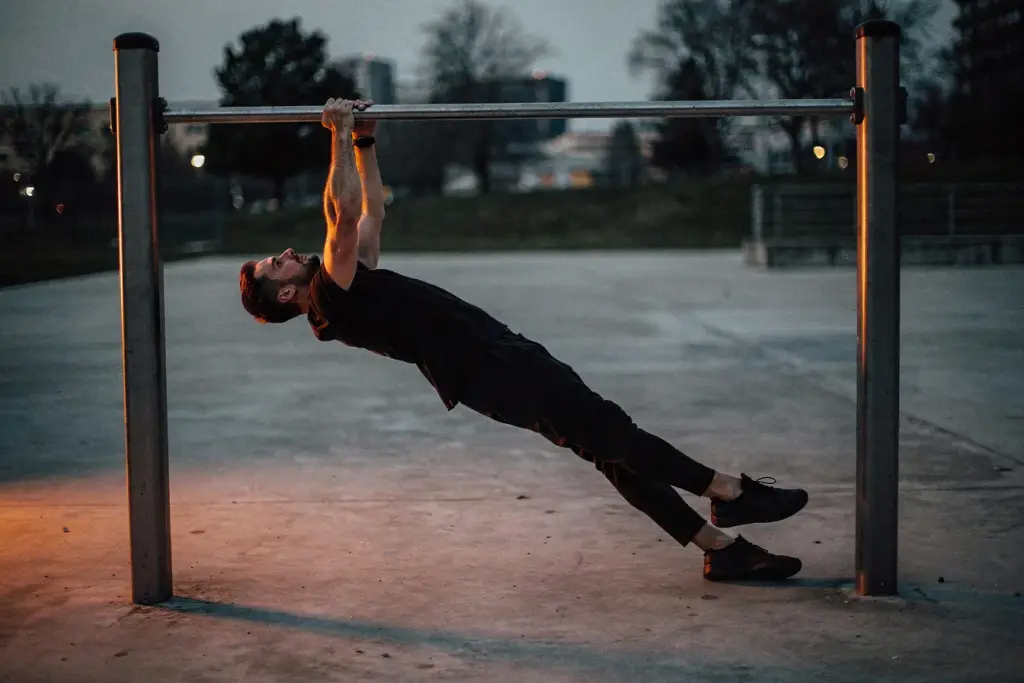
Works upper back, rear shoulders, bicepsLevel beginnerStart 3 × 8–10
No pull-up bar? This is your pull. Lie under a sturdy table or a low bar, grip the edge and pull your chest up to it with your body straight.
Bend your knees to make it easier; raise your feet to make it harder. Not sure about your table? Superman holds on the floor train the same muscles with nothing to slip off.
 No bar at home? These moves cover the same back musclesCalisthenicmovement · 7:31 · YouTube
4. Bodyweight squat
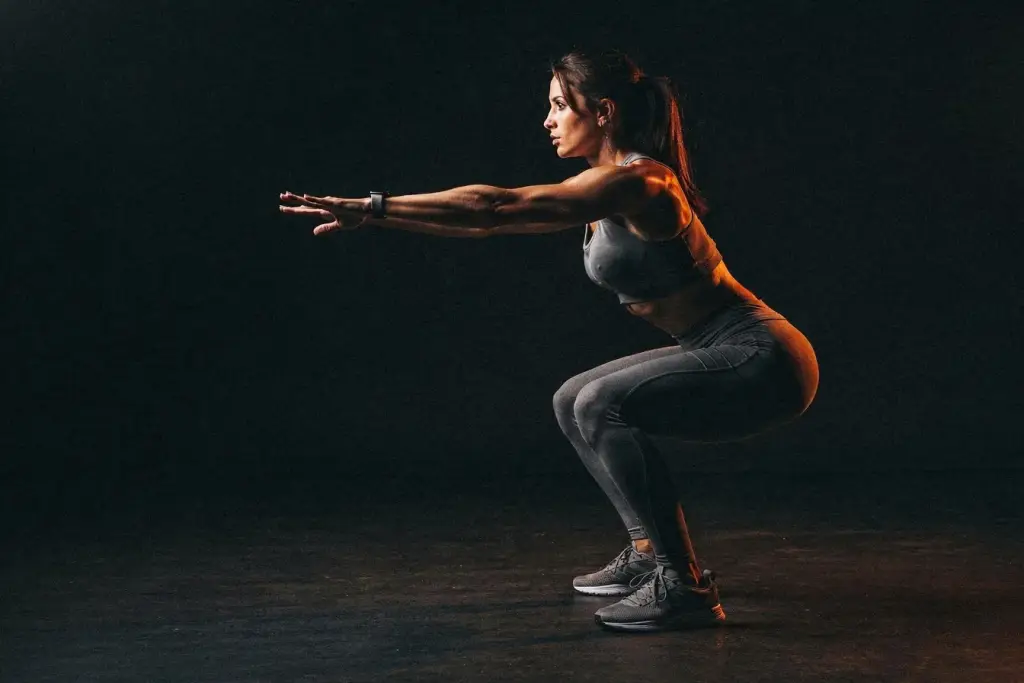
Works quads, glutesLevel beginnerStart 3 × 15
- Feet about shoulder-width apart, toes turned out slightly.
- Sit your hips back and down as if into a low chair, chest up.
- Go as deep as you can with your heels down, then stand tall.
Easier: sit down to a chair and stand back up. Harder: jump squats, then shrimp or pistol squats on one leg.
 See the full squat broken down, step by stepCalisthenicmovement · 8:00 · YouTube
5. Reverse lunge
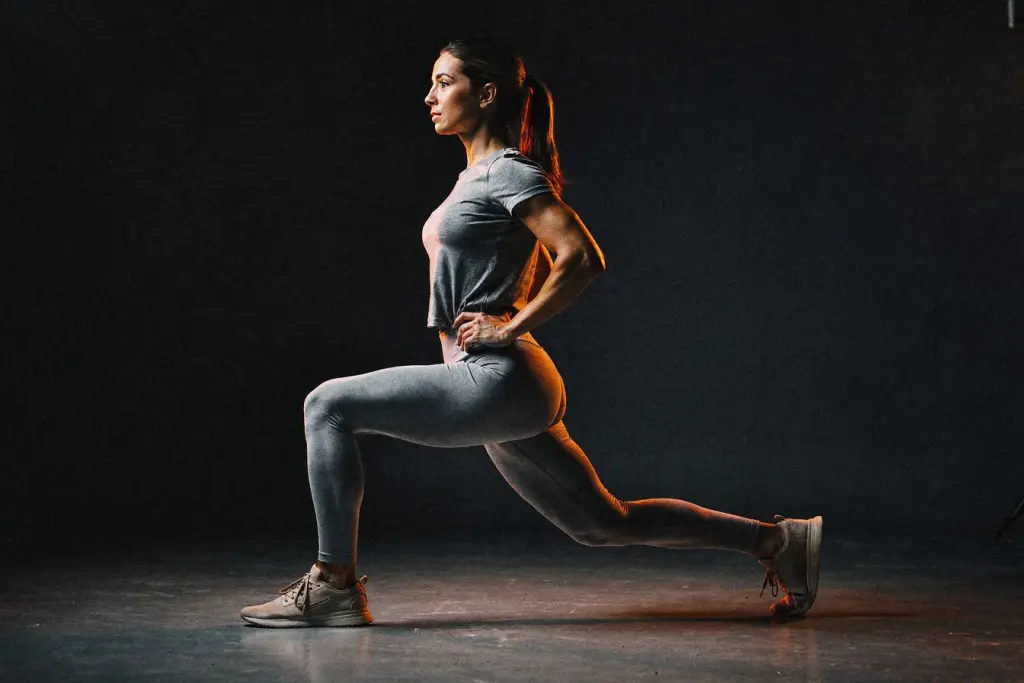
Works quads, glutes, balanceLevel beginnerStart 3 × 8 per leg
Lunges expose the imbalances squats hide, because each leg works alone. Stepping back is also kinder to your knees than stepping forward.
- Step one foot back and lower until both knees are near 90 degrees.
- Keep most of your weight on the front heel.
- Drive through that heel to stand, then switch legs.
Hold a wall for balance at first. Once that’s easy, take three full seconds to lower.
 Here's how to get more out of every lungeFitnessFAQs · 4:15 · YouTube
6. Dips
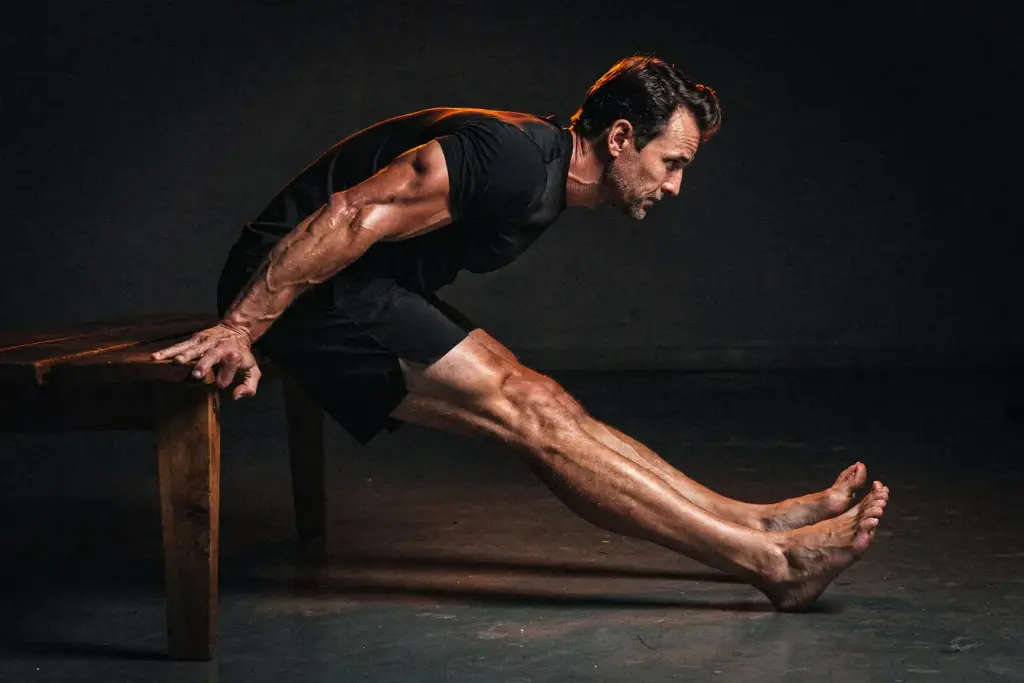
Works triceps, chest, shouldersLevel beginnerStart 3 × 8–10
The fastest way to stronger arms without weights. At home, use the edge of a sturdy chair or bench behind you, or two chairs side by side.
- Hands on the edge, fingers forward, feet out in front.
- Lower until your upper arms are about parallel to the floor, shoulders away from your ears.
- Press back up to straight arms.
Bent knees make it easier. Straight legs, then parallel bars, make it much harder.
 Watch the right dip technique, cue by cueCalisthenicmovement · 4:38 · YouTube
7. Pike push-up
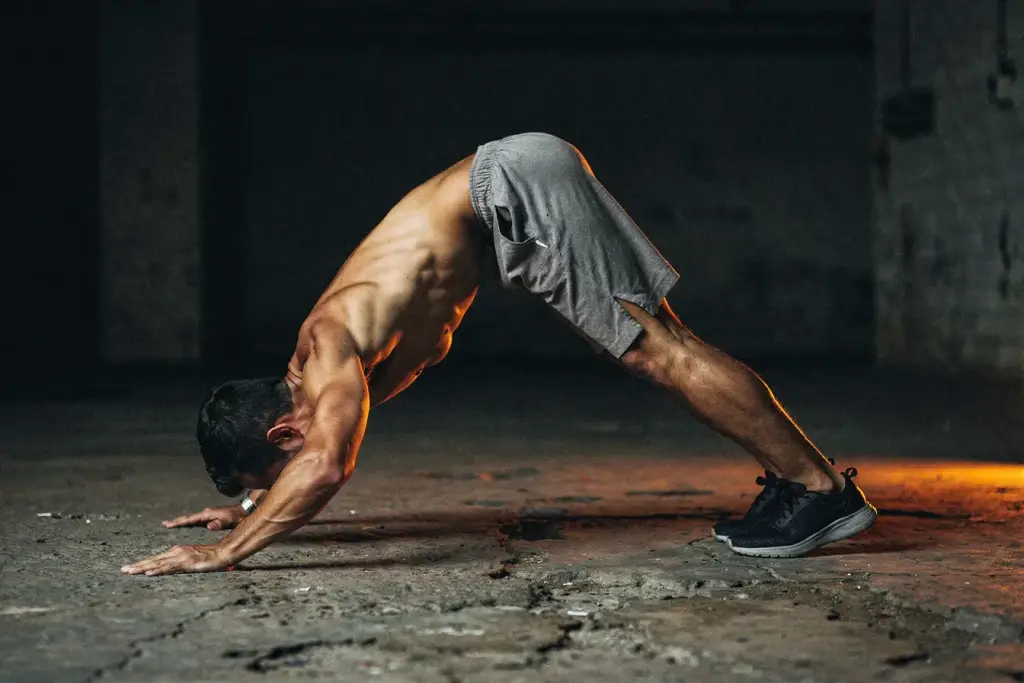
Works shoulders, tricepsLevel intermediateStart 3 × 6–8
The bodyweight version of an overhead press, and your first step toward a handstand push-up.
Start in a downward-dog shape with your hips high. Bend your elbows and lower the top of your head toward the floor in front of your hands, then press back up. Feet on a chair makes it harder.
 Here's the pike push-up with its progressionsChris Calisthenics · 4:32 · YouTube
8. Forearm plank
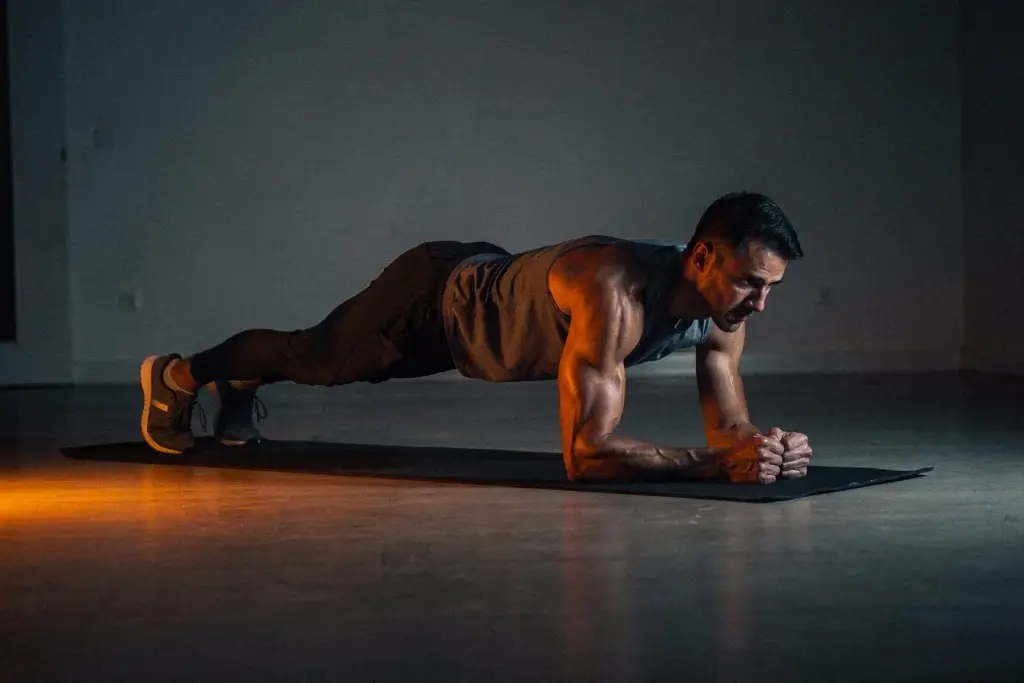
Works abs, deep core, shouldersLevel beginnerStart 3 × 20–30 sec
- Elbows under your shoulders, body straight from head to heels.
- Squeeze your glutes and brace as if someone’s about to poke your stomach.
- Hold, breathing slowly, until your form starts to slip.
Once 60 seconds feels steady, a longer hold teaches you little. Switch to shoulder taps or plank-to-push-ups instead.
 Get your plank right in about two minutesCalisthenicmovement · 2:19 · YouTube
9. Glute bridge
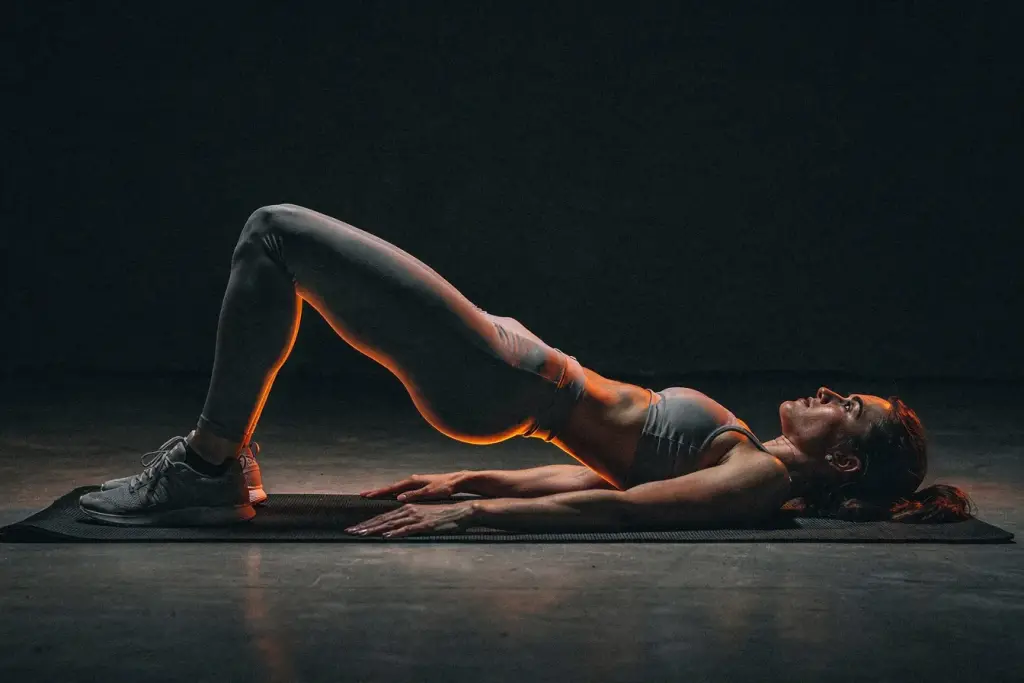
Works glutes, hamstrings, lower backLevel beginnerStart 3 × 15
The antidote to sitting all day. Lie on your back, knees bent, feet flat. Push through your heels and lift your hips until your body is straight from knees to shoulders, squeeze, then lower.
Move to a single-leg bridge when 20 reps with a pause at the top feel easy.
 Here's what a good bridge looks likeAirrosti Rehab Centers · 2:20 · YouTube
10. Leg raises
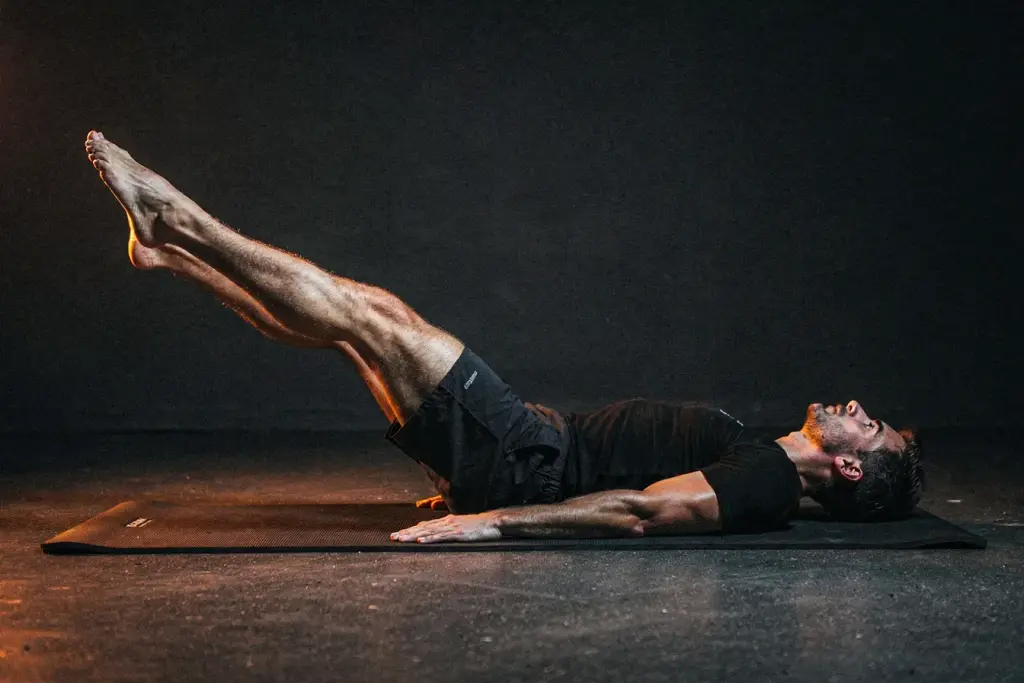
Works lower abs, hip flexorsLevel intermediateStart 3 × 8–12
Lie flat with your hands under your hips and legs straight. Lift your legs to vertical, then lower them slowly without letting your lower back peel off the floor.
The lowering is where the work happens, so don’t rush it. Bend your knees to make it easier; V-ups are the harder version.
 Avoid the most common leg-raise mistakeThe Red Delta Project · 2:43 · YouTube
11. Mountain climbers
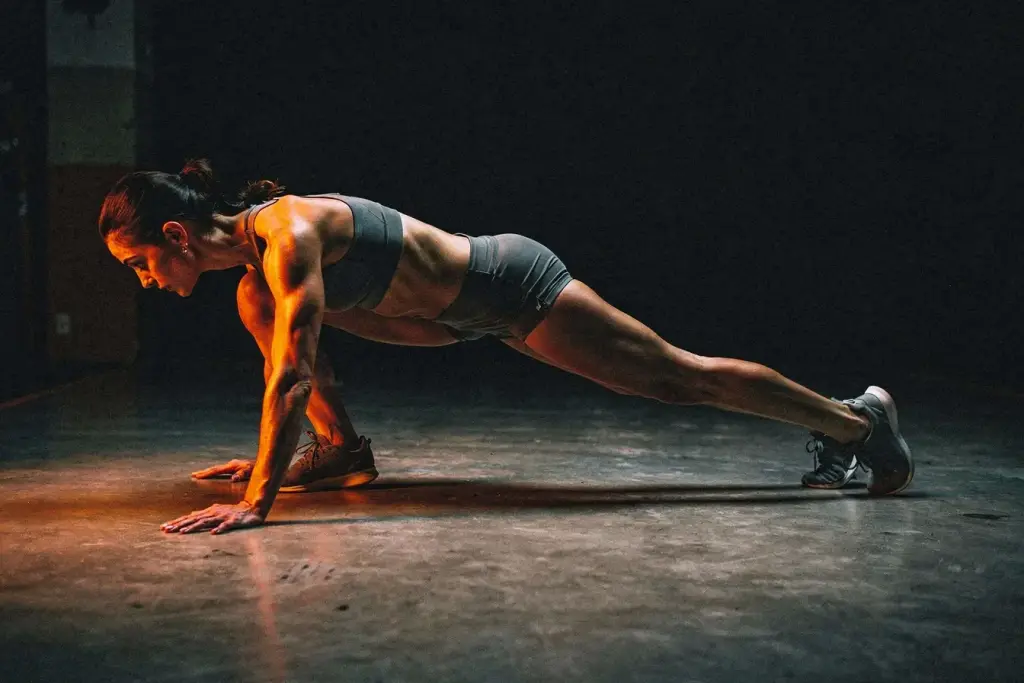
Works core, shoulders, cardioLevel beginnerStart 3 × 30 sec
Cardio and core in one move. From a high plank, drive one knee toward your chest, then switch legs quickly, like running in place, keeping your hips level with your shoulders.
Step instead of jumping if your wrists or lungs need a break.
 Watch the right position and paceFit Father Project · 2:39 · YouTube
12. Burpee
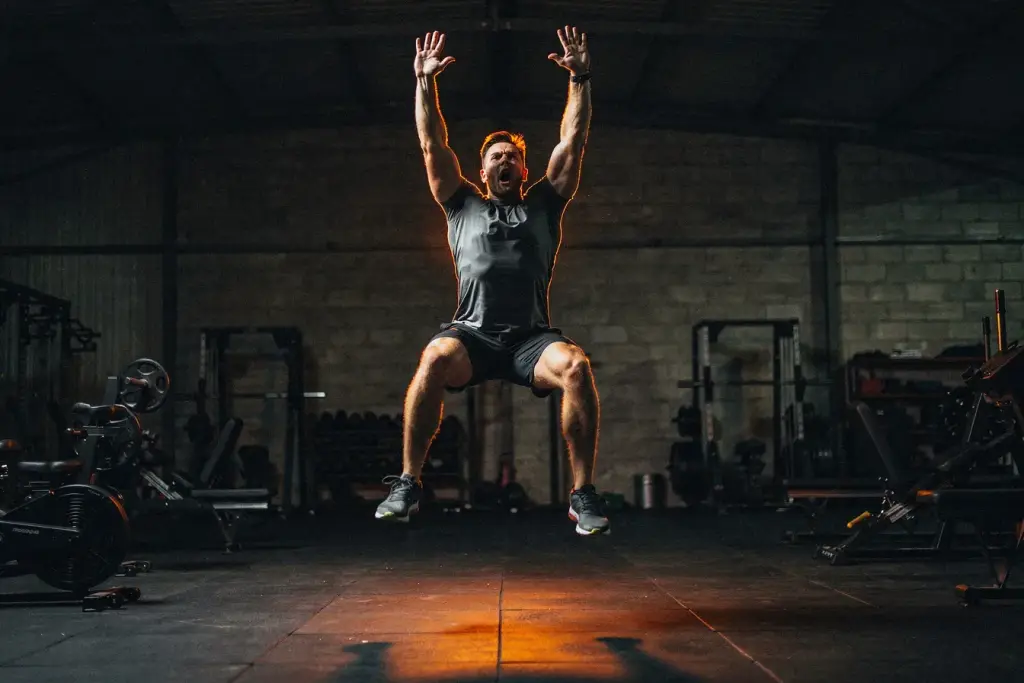
Works full body, conditioningLevel intermediateStart 3 × 6–10
The drill everyone loves to hate, and the fastest way to get your heart rate up.
- Squat down and put your hands on the floor.
- Jump or step your feet back into a plank.
- Bring them forward again, stand up and jump.
No-jump burpees are a solid beginner version. Add a push-up at the bottom when you want more.
 Here's a clean burpee, start to finishWell+Good · 3:24 · YouTube
A bodyweight workout you can do at home
Do this full-body circuit three times a week, with a rest day between sessions. Rest 30 to 60 seconds between exercises and repeat for 2 or 3 rounds, about 20 to 35 minutes in all.
| Exercise | Beginner target | Easier option |
|---|---|---|
| Push‑ups | 8–12 reps | Hands on a counter |
| Squats | 15 reps | Squat to a chair |
| Inverted rows | 8 reps | Bent knees |
| Reverse lunges | 8 per leg | Hold a wall |
| Chair dips | 8–10 reps | Bent knees |
| Glute bridges | 15 reps | Pause at the top |
| Forearm plank | 20–30 s | From your knees |
| Mountain climbers | 30 s | Slow steps |
No table to row under? Swap the rows for 20-second superman holds.
 New to training? Chris Heria on how to start without burning outChris Heria · 13:50 · YouTube
Prefer short daily sessions?
The same moves work as a daily routine, as long as each day trains something different. Here’s Week 1 of the 28-day program in Military Calisthenics Men – MLT, where most moves run for 30 to 40 seconds:
| Day | Focus | Main exercises | Time |
|---|---|---|---|
| 1 | Push and core | Push-ups, dips, plank, crunches | 12 min |
| 2 | Back and glutes | Back extensions, superman, bridge | 12 min |
| 3 | Legs and power | Squats, lunges, jump squats | 11 min |
| 4 | Upper body | Push-ups, dips, shoulder taps | 13 min |
| 5 | Full-body HIIT | Burpees, climbers, high knees | 11 min |
| 6 | Skills and balance | Pike hold, crow pose, balance | 10 min |
| 7 | Endurance | Push-ups, squats, lunges | 12 min |
Times include a short mobility warm-up and a few stretches at the end. The free 28-day PDF lays out every day, and the full four-week plan explains how it climbs from Recruit to Elite.
How do you keep getting stronger?
Once 12 to 15 reps feels easy, more reps stop paying off. Make the move harder instead: change the angle, slow the lowering to three seconds, go one-sided, or pause at the hardest point.
Do that for a few months and the fun part opens up: skills. Each one has a sensible entry point.
| Skill | Usually comes after | Build it with |
|---|---|---|
| Crow pose | Steady 60-second plank | Pike holds, wrist prep |
| Wall handstand | 10 pike push-ups | Wall walks, pike holds |
| Archer push‑up | 20 clean push-ups | Wide push-ups, negatives |
| Pistol squat | 25 deep squats | Shrimp squats, box squats |
| Muscle‑up | About 10 strict pull-ups | Explosive pull-ups, bar dips |
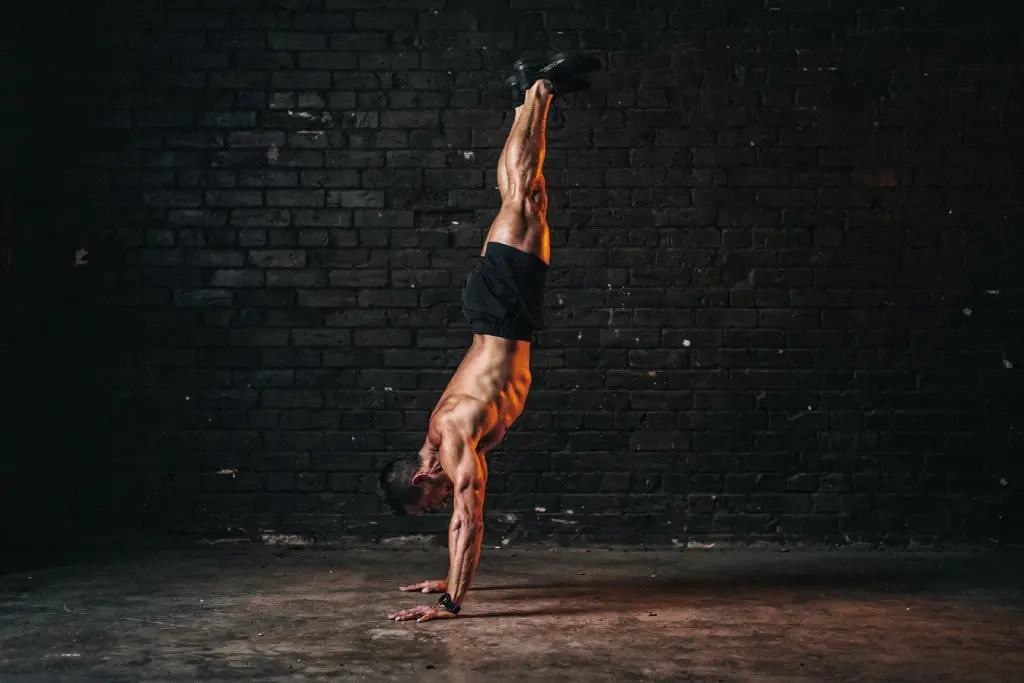
Skills are hard to learn from text. If you’d rather watch each step, CalistX has a large library of calisthenics video tutorials and playlists. Full disclosure: it comes from the same team as this site.
How many calories do bodyweight exercises burn?
It depends on your body weight and effort, not on rep count. These figures use the energy values in the 2024 Compendium of Physical Activities, the standard research reference.
| In 10 minutes | 130 lb | 160 lb | 190 lb |
|---|---|---|---|
| Planks, crunches | 29 | 36 | 42 |
| Push‑ups, squats | 39 | 48 | 57 |
| Circuit | 62 | 76 | 90 |
| Fast push‑ups, pull‑ups | 77 | 95 | 113 |
| Burpee‑style HIIT | 114 | 140 | 166 |
The math: calories per minute = MET × 3.5 × body weight in kg ÷ 200, using 2.8 MET for planks and crunches, 3.8 for moderate moves, 6.0 for a circuit, 7.5 for vigorous work and 11.0 for burpee-style HIIT.
So a 160 lb person needs roughly 40 minutes of steady push-ups to burn 200 calories, or about 26 minutes of circuit training. For fat loss, food matters far more; see bodyweight training for weight loss.
Frequently asked questions
What are bodyweight exercises called?
Calisthenics. The word comes from the Greek kalos, beautiful, and sthenos, strength, and covers any exercise where your own body is the main load: push-ups, pull-ups, squats, dips, lunges and planks.
What are the best bodyweight exercises?
Push-ups, pull-ups or inverted rows, squats, reverse lunges, dips, pike push-ups, planks, glute bridges, leg raises, mountain climbers and burpees. Together they train every major muscle group with almost no equipment.
Can you build muscle with only bodyweight exercises?
Yes. Progressive bodyweight training builds strength and muscle comparable to weights, as long as each exercise gets harder over time and sets end close to failure. See how to build muscle at home.
Can you do bodyweight exercises every day?
Yes, if you rotate muscle groups or keep some days light. A push, pull, legs split lets you train most days while each muscle recovers.
Are bodyweight exercises enough?
For a strong, fit, athletic body, yes. Heavy weights make it easier to load the legs and chase maximal strength, so powerlifters and bodybuilders still need a gym.
Do bodyweight exercises count as strength training?
Yes. They’re resistance training with your body as the load. The WHO recommends muscle-strengthening activity on at least two days a week, and bodyweight work counts toward that.
What bodyweight exercise burns the most calories?
Burpees, mountain climbers and jump squats done as fast intervals. They burn three to four times as much per minute as planks or slow push-ups.
Are bodyweight exercises good for weight loss?
They help, mainly by protecting muscle while you lose fat, but diet does most of the work. Pair circuits with a small calorie deficit and daily walking.
What are good bodyweight exercises for beginners?
Wall or counter push-ups, squats to a chair, glute bridges, forearm planks from the knees and reverse lunges holding a wall. Start with three short full-body sessions a week.
How many push-ups should a man be able to do?
Thirty strict push-ups is a strong practical goal. In one study, men able to do more than 40 had far fewer heart events than those who managed fewer than 10.
How long does it take to see results?
Strength improves within two to four weeks. Visible muscle usually takes eight to twelve weeks of consistent training, and food matters as much as training; see our guide to calisthenics nutrition.
What is military calisthenics?
The same exercises with a stricter structure: a fixed daily plan, timed intervals and a standard to hit. Read what military calisthenics is for the full picture.
Sources
- Yang J, et al. (2019). Association between push-up exercise capacity and future cardiovascular events among active adult men. JAMA Netw Open.